Posts

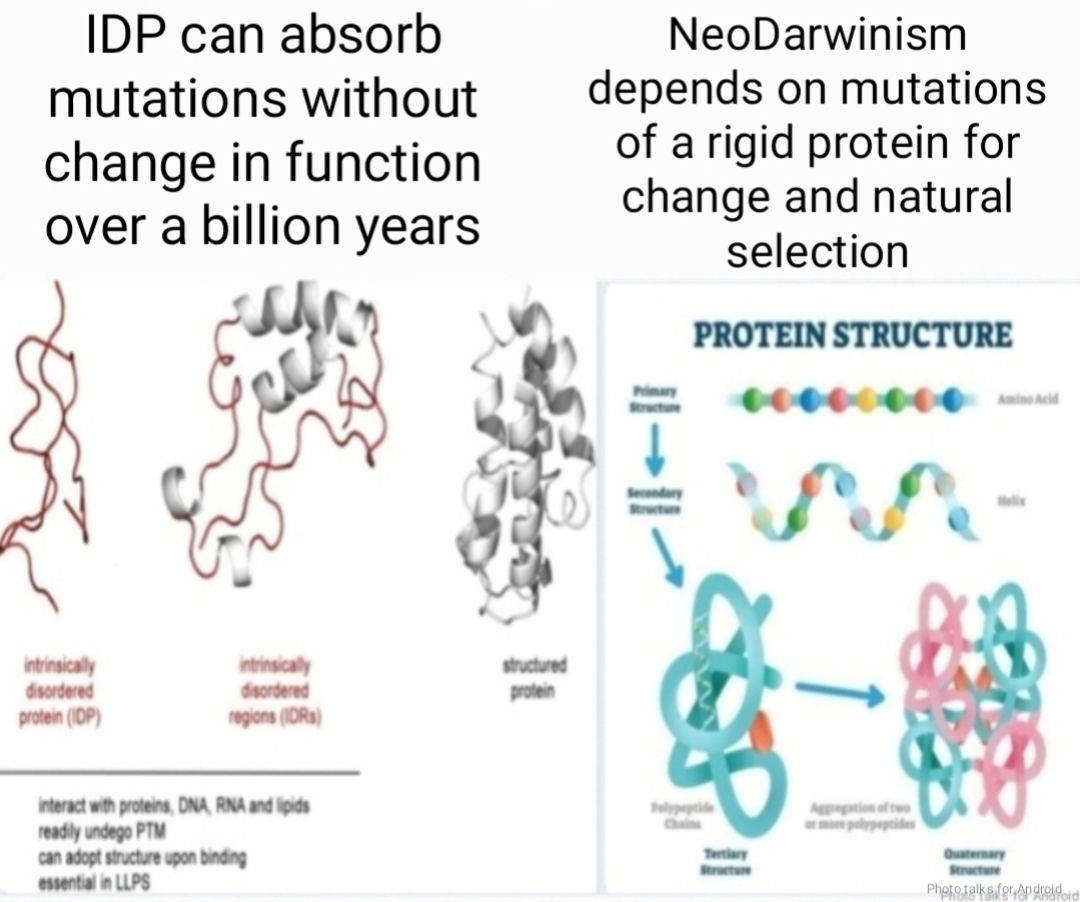
Coding Regions of Intrinsic Disorder Accommodate Parallel Functions: A Dance of Structure and Information
Image
Within the intricate ballet of life, proteins play a starring role, their movements by the genetic code. But proteins are not solely actors; their sequences can hold multiple scripts, allowing them to perform parallel functions like virtuoso performers juggling melodies. And the stage for this remarkable dual act often lies within regions of intrinsic disorder (IDRs). Traditionally, proteins were viewed as rigid, well-defined structures whose every fold and turn dictated their function. IDRs, however, challenge this paradigm. Lacking strict three-dimensional shapes, they resemble flexible dancers, swaying to the music of interacting molecules. This very flexibility, once considered a handicap, is now recognized as a superpower, enabling IDRs to accommodate diverse functions within their coding sequences. The Unstructured Advantage: The absence of a fixed structure in IDRs allows them to tolerate mutations more readily than their structurally-constrained counterparts. This tolerance ope...

Fine-scale Quantification of GC-biased Gene Conversion Intensity in Mammals: A Deep Dive

Image
Figure: Non crossover gBGC The intricate dance of evolution plays out not only in the grand theater of natural selection but also in the subtle interactions within genomes. One such silent yet influential player is GC-biased gene conversion (gBGC), a molecular force that subtly warps the composition of our genetic blueprint. This process preferentially replaces AT base pairs with GC pairs, shaping the landscape of nucleotide diversity and influencing patterns of evolution. Yet, despite its significant impact, quantifying the intensity and variability of gBGC across species and genes remains a challenging feat. A Murky Relationship: The existing literature paints an unclear picture of the relationship between gBGC strength and a species' effective population size (Ne). Ne, a crucial parameter in population genetics, reflects the number of individuals effectively contributing to the next generation's gene pool. Intuitively, one might expect gBGC to be more pronounced ...

Decoding the Poplars: A Single Gene Holds the Key to Sex Determination

Image
For centuries, biologists have been captivated by the elegant dance of sex determination in plants. Unlike mammals, where XX chromosomes define females and XY defines males, the story in plants is far more fluid and diverse. Dioecy, the separation of males and females onto distinct individuals, offers a particularly intriguing puzzle. One recent study , published in Nature Plants, unravels a captivating chapter in this story, revealing that the epigenetic control of a single gene, ARR17, holds the reins of sex determination in poplars , a genus of fast-growing trees known for their majestic stature and ecological importance. The journey begins with a fundamental dilemma: how can epigenetics change a single gene to orchestrate such a dramatic split in development, shaping an individual into either a pollen-producing male or a fruit-bearing female? The researchers, led by Niklas Mähler and Zulema Carracedo Lorenzo, zeroed in on the Y chromosome in male poplars, a region pr...

ZFP281: Masterminding Transitions in the Murky World of Pluripotency

Image
Pluripotency, the enigmatic ability of cells to morph into any cell type in the body, holds immense promise for regenerative medicine and stem cell therapies. Understanding the intricate dance of factors governing this ability is key to unlocking its full potential. One such factor, ZFP281, has recently emerged as a maestro, orchestrating transcriptional and epigenetic changes that guide pluripotent state transitions in mice. Delving into this fascinating story unveils a symphony of molecular interactions, shedding light on the delicate balance between de novo DNA methylation and dynamic gene expression. The pluripotent landscape is not a monolithic plateau, but rather a dynamic continuum with distinct peaks. In mice, this continuum encompasses the naive, formative, and primed states, mirroring the epiblast's development during the peri-implantation phase. Each state boasts a unique gene expression profile and epigenetic signature, delicately regulated by a complex int...

Beyond Colocalization: Unraveling the Multifaceted World of Mammalian Retrocopies

Image
The recent revelation of interchromosomal colocalization between mammalian retrocopies and their parental genes in the article "Interchromosomal Colocalization with Parental Genes” is Linked to the Function and Evolution of Mammalian Retrocopies" throws down the gauntlet to the long-held notion of retrocopies as mere evolutionary fossils. This groundbreaking study paints a vibrant picture of retrocopies not as inert bystanders, but as active participants in the dynamic theater of genome evolution. However, venturing beyond the captivating phenomenon of colocalization, a plethora of intriguing questions and avenues for future exploration emerge.  The Symphony of Regulatory Borrowing: The study's observation that colocalized retrocopies reside within active subcompartments of the genome, where regulatory elements orchestrate gene expression, opens a Pandora's box of possibilities. Do these elements directly orchestrate the "awakening" of silent r...