Posts

The Epigenetic Enigma of the Atlas Moth: Rethinking Rapid Mouthless Development and the Modern Synthesis

Image
“ It is doubtful, however, whether even the most statistically minded geneticists are entirely satisfied that nothing more is involved than the sorting out of random mutations by the natural selective filter.” -Conrad Waddington, father of epigenetics, published in 42' the Journal Nature the same year the Modern Synthesis was adopted The atlas moth ( Attacus atlas ), a magnificent giant of the insect world, captivates not only with its sheer size and striking wing patterns but also with a perplexing biological characteristic: its remarkably brief, entirely mouthless adult stage. Emerging from its massive cocoon, the adult atlas moth lives for only a few days, driven solely by the imperative of reproduction, unable to feed and sustained entirely by reserves accumulated during its larval stage. This rapid, aphagous (non-feeding) existence presents a fascinating biological puzzle, and while evolutionary explanations have traditionally focused on genetic adaptations, the bu...

No, the EES is not just a add on to Neo-Darwinism aka the Modern Synthesis

Image
"The summary of the state of affairs on the 150th anniversary of the Origin is somewhat shocking: in the post-genomic era, all major tenets of the Modern Synthesis fthe theory of evolution) are, if not outright overturned replaced by a new and incomparably more complex vision of the key aspects of evolution (EES). So, not to mince words, the Modern Synthesis is gone" -Eugene Koonin, an evolutionary biologist (Cited by over 270,000 evolutionary scientists.)  The Extended Evolutionary Synthesis (EES) represents a significant departure from the traditional neo-Darwinian framework, also known as the Modern Synthesis. While both theories aim to explain evolutionary change, they differ fundamentally in their underlying mechanisms and the roles they assign to various biological processes. A crucial point of divergence lies in the interpretation and application of the term "evolutionary," particularly concerning the incorporation of epigenetic mechanisms. Neo-Da...

Horizontal Gene Transfer, and the Epigenetic Challenge to the Modern Synthesis: A New Perspective on Antibiotic Resistance Emergence

Image
The journal article "Functions predict horizontal gene transfer and the emergence of antibiotic resistance" proposes a paradigm shift in our understanding of how antibiotic resistance arises and spreads. Traditionally, the focus has been on genetic mutations and vertical inheritance, fitting neatly within the framework of the Modern Synthesis of evolution.  However, this article introduces a compelling argument for the primary role of functional relatedness in predicting Horizontal Gene Transfer (HGT), and critically, implicates epigenetics as a key, yet often overlooked, player in this dynamic. This new perspective not only offers a more nuanced view of antibiotic resistance but also presents a significant challenge to the long-held tenets of the Modern Synthesis. At its core, the article posits that the functional compatibility between genes and their environments—rather than mere sequence similarity or phylogenetic distance—is the primary driver fo...

Major Episodes of Horizontal Gene Transfer and Their Epigenetic Implications in Land Plant Evolution

Image
The groundbreaking study , "Major episodes of horizontal gene transfer drove the evolution of land plants," by Cheng et al. (2024), published in Cell, presents a paradigm-shifting perspective on the evolutionary trajectory of terrestrial flora. By meticulously analyzing genomic data across diverse plant lineages, the research unveils compelling evidence for the widespread and impactful role of horizontal gene transfer (HGT) as a primary driver of plant innovation, particularly during critical transitions in their adaptation to land. This challenges the long-held view within the modern synthesis that primarily emphasizes vertical inheritance and gradual accumulation of mutations as the sole engines of evolution.  Furthermore, the implications of this HGT-driven evolution extend deeply into the realm of epigenetics, suggesting a complex interplay between newly acquired genetic material and the regulatory mechanisms that govern its expression and integration within t...

How Complete Ape Genome Sequencing Recasts Genetic Similarity and Poses New Questions for Evolutionary Theory

Image
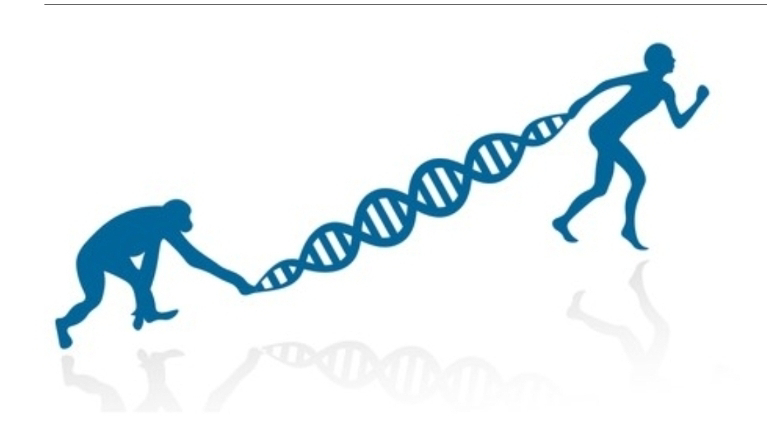
The recent landmark study of complete, telomere-to-telomere sequencing of multiple ape genomes—including chimpanzee, bonobo, gorilla, orangutan, and siamang—represents a quantum leap in our ability to understand the genetic landscape of our closest living relatives. These highly accurate and comprehensive genome assemblies, resolving previously intractable complex regions, are not only refining our picture of primate evolution but also directly challenging long-held figures for DNA similarity between humans and apes. Furthermore, the sheer scale and nature of the newly uncovered genetic differences are prompting deeper consideration of the mechanisms and intricacies of evolutionary change, thereby stimulating fresh discussion within and around the framework of neo-Darwinism. For decades, the oft-quoted statistic that humans and chimpanzees share approximately 98.5% to 99% of their DNA has been a cornerstone of popular and scientific understanding of our close e...

“On the Thermodynamics of DNA Methylation Process," incorporating epigenetics and its challenge to the Modern Synthesis.

Image
The landscape of molecular biology has been significantly reshaped by the burgeoning field of epigenetics, a domain that investigates heritable changes in gene expression that occur without alterations to the underlying DNA sequence. Among the most well-characterized epigenetic mechanisms is DNA methylation, a biochemical process involving the addition of a methyl group, typically to the fifth carbon of a cytosine base, forming 5-methylcytosine (5mC).  While the enzymatic machinery and specific targets of DNA methylation have been extensively studied, a deeper thermodynamic understanding of this crucial regulatory process offers profound insights into its intricate control, cellular economy, and, perhaps most compellingly, its potential to challenge the established tenets of the Modern Synthesis of evolution. From a purely biochemical perspective, DNA methylation is catalyzed by a family of enzymes known as DNA methyltransferases (DNMTs), utilizing S-adenosylmethionine (SAM...

Unveiling the Epigenome's Informational Core: Potential Energy Landscapes and the Challenge to the Modern Synthesis

Image
The journal article "Potential energy landscapes identify the information-theoretic nature of the epigenome" presents a groundbreaking approach to understanding the complex world of epigenetics. Moving beyond traditional interpretations, this work leverages principles from statistical physics and information theory to construct "potential energy landscapes" from whole-genome bisulfite sequencing (WGBS) data. This innovative framework allows researchers to quantify the inherent stochasticity of DNA methylation, a key epigenetic modification, and, in doing so, reveals the profound informational depth of the epigenome. The implications of this research are far-reaching, particularly in how they illuminate the role of epigenetics in development  challenging the prevailing Modern Synthesis of evolution. The Integral Role of Epigenetics Epigenetics, broadly defined, refers to heritable changes in gene expression that occur without alterations to the underlyin...